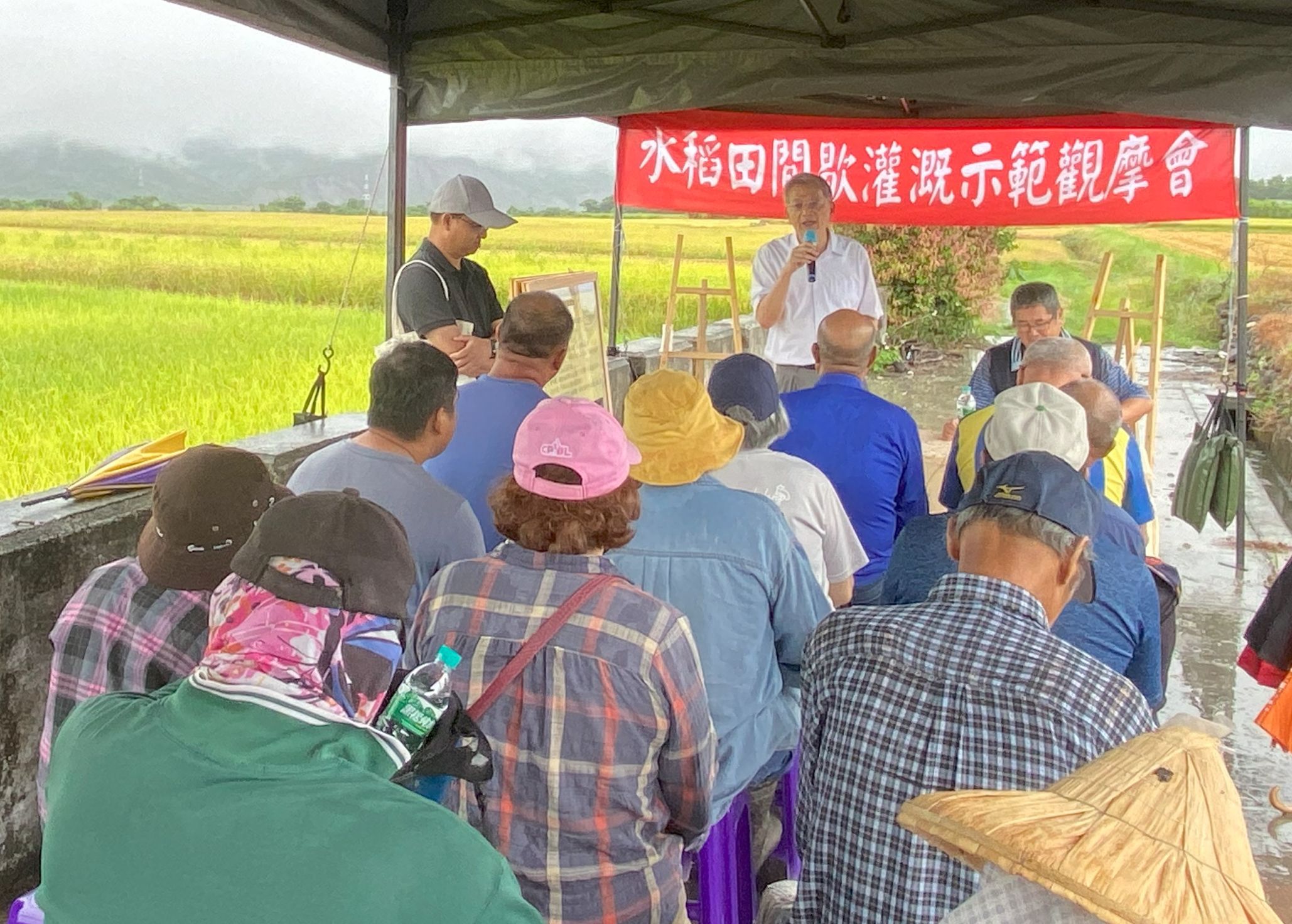
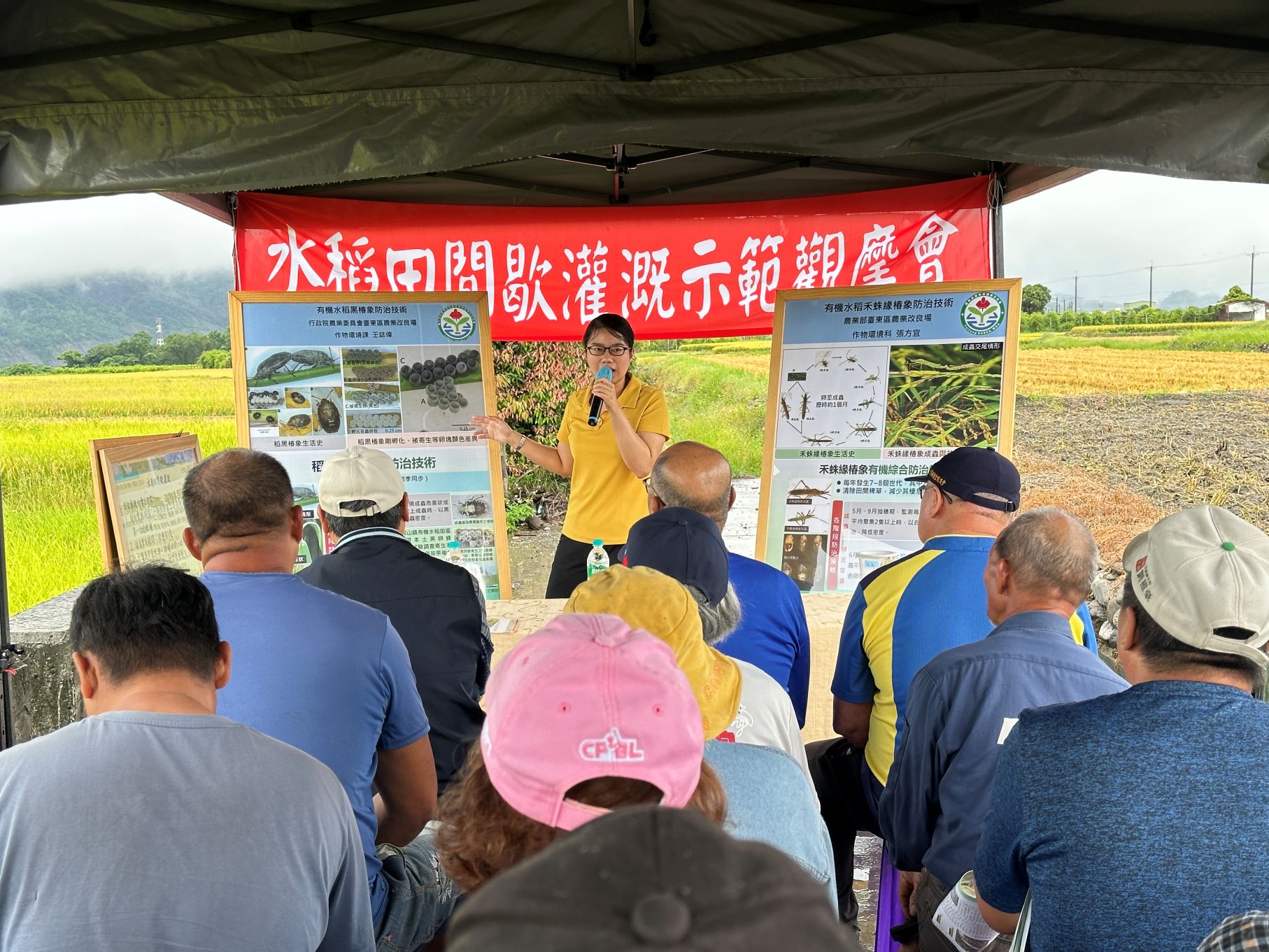
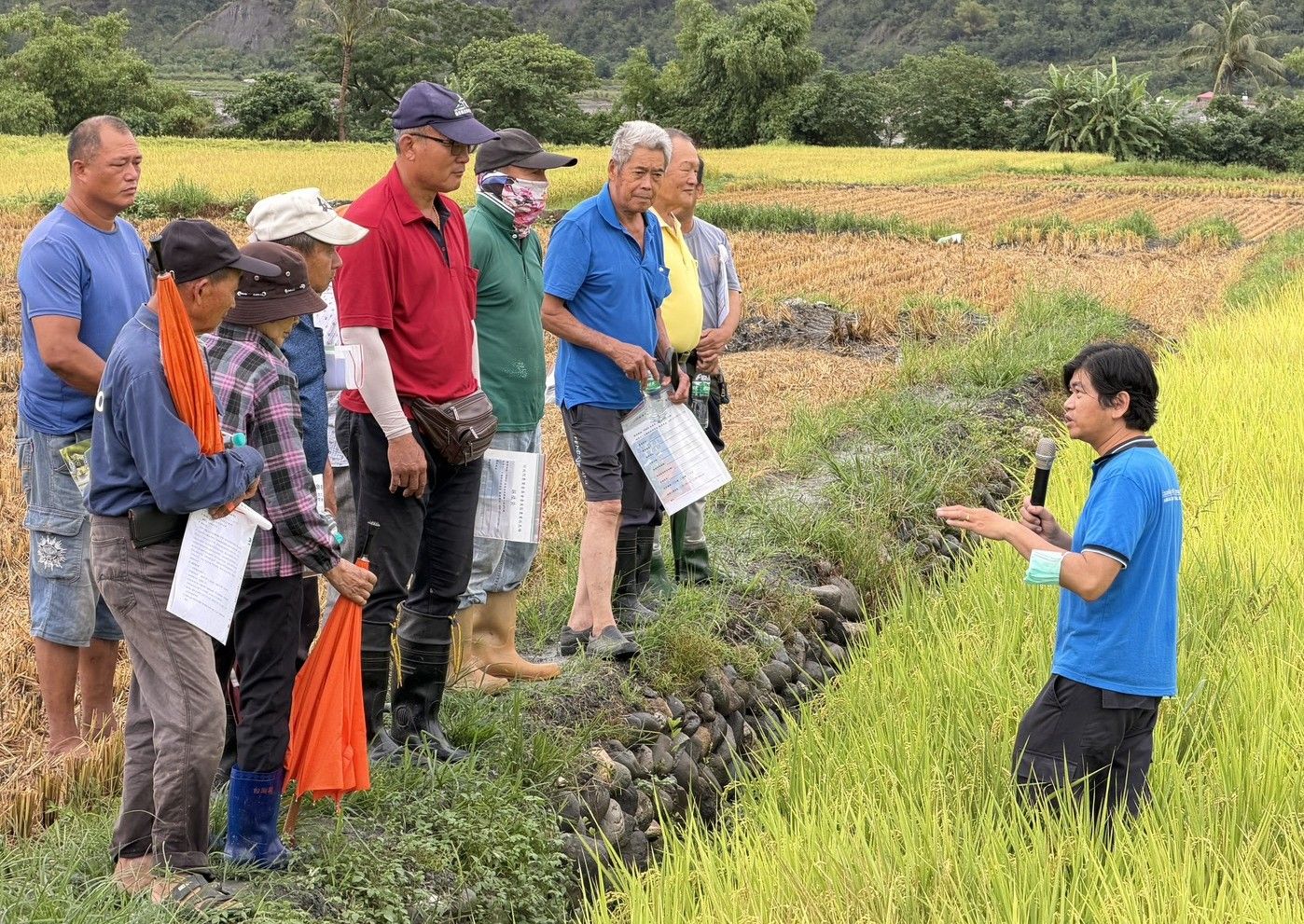
The Taitung District Agricultural Research and Extension Station (TTDARES) held the Rice Field AWD Demonstration Event to promote the alternate wetting and drying (AWD) irrigation method so as to reduce greenhouse gas emissions and boost farmers’ earnings. Conventionally, rice fields are flooded for a long period, causing excessive methane emissions. Meanwhile, AWD is implemented after the second topdressing in the first crop season and after the first topdressing in the second crop season, continuing until one week before harvest. Except during the field-drying, panicle formation, and flowering/heading stages, irrigation begins only when the water level drops to five centimeters below the soil surface and stops when it reaches five centimeters above the surface. Field trials reveal that methane emissions are reduced by 359 kilograms per hectare, which corresponds to a reduction in global warming potential of 4.7 metric tons of CO₂ equivalent. Production per hectare reached 6,400 kilograms, exceeding the conventional method by 200 kilograms, successfully achieving reduced emissions paired with increased production.