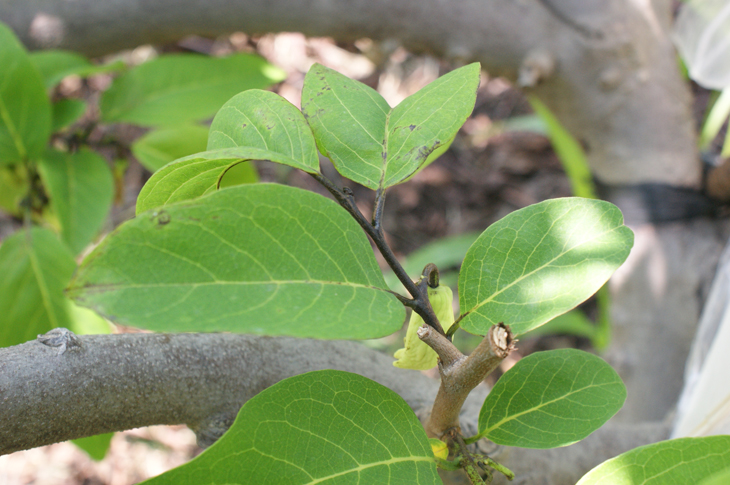
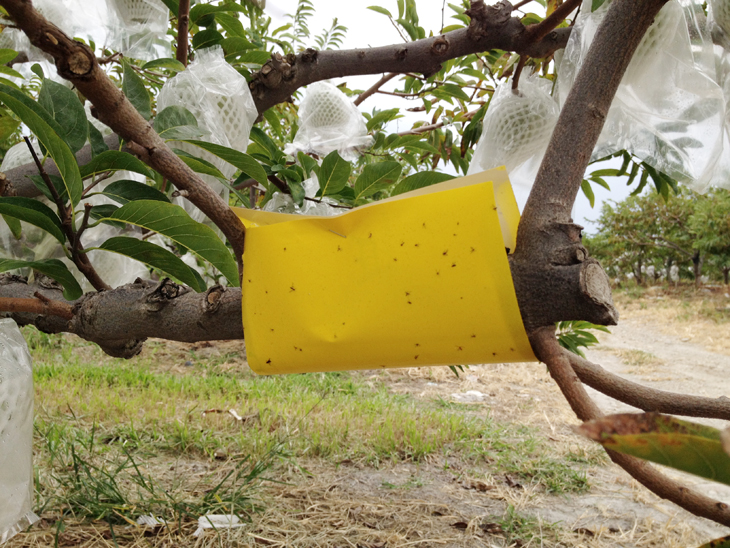
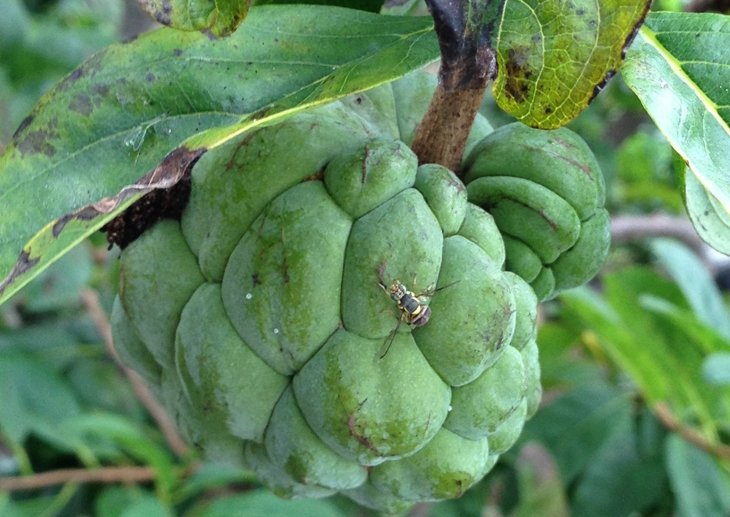
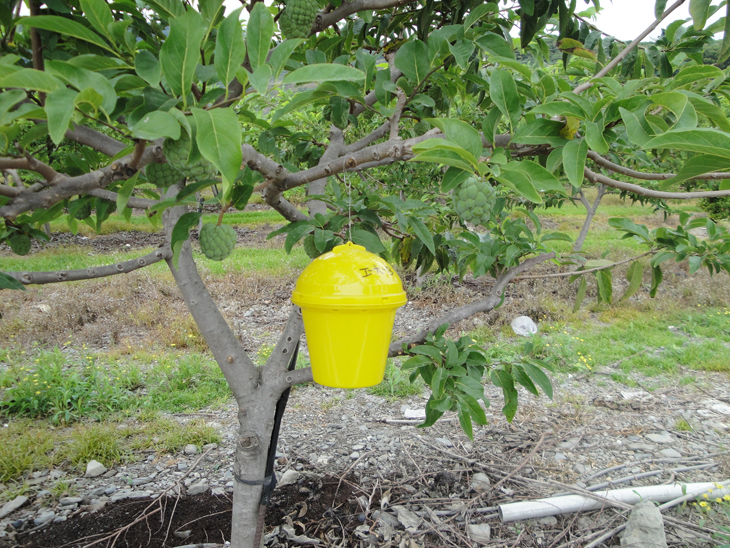
Recently, the weather has been dry and hot. Sugar apple trees are in the budding and small- to medium-sized fruit stages of the second growing season. During on-site monitoring, the Taitung District Agricultural Research and Extension Station (TTDARES) of the Council of Agriculture, Executive Yuan, has discovered a trend of an increase in population densities of the chilli thrips (Scirtothrips dorsalis Hood) and the oriental fruit fly (Bactrocera dorsalis Hendel) in the areas of Beinan Township, Taitung City, and Taimali Township. The TTDARES has asked growers to frequently check their orchards and take preventative measures when necessary so as to lessen damage to crops and overall losses. For information on measures and control agents, growers may refer to the Council of Agriculture’s Plant Protection Manual. For related questions, growers may call the TTDARES Plant Protection Lab (089-325-015) or any of the regional Plant Disease and Pest Diagnosis Service Stations (toll free at 0800-069-880).